
Tech
view:source:rockingwolvesradio.com/main/chatroom/chatroom.html

Have you ever stumbled across a long, technical-looking phrase like view:source:rockingwolvesradio.com/main/chatroom/chatroom.html and wondered what on earth it means?
At first glance, it looks complicated. It feels like something only programmers would understand. However, once you break it down step by step, it becomes surprisingly simple.
In this detailed guide, we’ll explore what view:source:rockingwolvesradio.com/main/chatroom/chatroom.html actually does, why someone might search for it, whether it’s safe, and how it connects to chatroom pages. Along the way, I’ll explain everything in plain language so you don’t need a technical background to follow along.
Let’s get started.
What Does “view:source” Actually Mean?
To begin with, the phrase view:source is not part of the website itself. Instead, it’s a special browser command.
When you type view:source:rockingwolvesradio.com/main/chatroom/chatroom.html into your browser, you’re asking your browser to show the underlying code behind that webpage. In other words, you’re not visiting the page in the normal way. Rather, you’re peeking behind the curtain.
Think of a website like a house.
- The webpage you normally see is the decorated living room.
- The source code is the blueprint and wiring behind the walls.
By using view:source:rockingwolvesradio.com/main/chatroom/chatroom.html, you’re basically saying, “Show me how this page was built.”
Breaking Down the Full URL
Now let’s divide the phrase into smaller pieces so it feels less overwhelming.
Here’s what each part means:
- view:source: – A browser instruction.
- rockingwolvesradio.com – The main domain name.
- /main/chatroom/ – A folder within the website.
- chatroom.html – A specific webpage file.
Altogether, view:source:rockingwolvesradio.com/main/chatroom/chatroom.html tells your browser to display the source code of the chatroom page on that site.
Although it looks technical, it’s simply a direct request to view code instead of the visual layout.
Why Would Someone Use view:source?
You might be wondering why anyone would bother typing view:source:rockingwolvesradio.com/main/chatroom/chatroom.html in the first place.
Actually, there are several common reasons.
1. Curiosity
First of all, curiosity drives a lot of online exploration. Some people just want to understand how websites work. Just as you might lift the hood of a car to see the engine, you might open the source code to see the structure of a webpage.
2. Learning Web Development
Additionally, beginners who are learning HTML often study real websites. When someone opens view:source:rockingwolvesradio.com/main/chatroom/chatroom.html, they can see the HTML structure, script references, and layout elements.
Years ago, I learned basic web design by opening page sources and studying them line by line. It felt like decoding a secret language. Over time, that “secret language” started to make sense.
3. Troubleshooting
On the other hand, developers sometimes use view source to diagnose issues. If a chatroom isn’t loading properly, checking the source might reveal missing files or broken links.
Therefore, view:source:rockingwolvesradio.com/main/chatroom/chatroom.html could be used for simple debugging.
Is It Safe to Use view:source?
This is one of the most common questions people ask.
Fortunately, the answer is simple: yes, it’s safe.
When you type view:source:rockingwolvesradio.com/main/chatroom/chatroom.html, you are only viewing text that your browser already downloaded. You’re not editing anything. You’re not injecting code. You’re not hacking.
In fact, viewing source code is a built-in feature in modern browsers. For example, you can right-click on almost any webpage and select “View Page Source.”
Consequently, there’s no danger in using it responsibly.
What You Will (and Won’t) See in the Source Code
If you open view:source:rockingwolvesradio.com/main/chatroom/chatroom.html, you will likely see:
- HTML tags like
<div>and<p> - Links to CSS stylesheets
- References to JavaScript files
- Embedded chat widgets
However, you will not see:
- User passwords
- Private database records
- Server-side processing logic
That’s because secure data is stored on the server, not inside the visible source code.
Imagine ordering food at a restaurant. You can see the menu and the dining area, but you can’t access the kitchen storage room. In the same way, view:source:rockingwolvesradio.com/main/chatroom/chatroom.html only shows what’s meant to be visible to browsers.
Can Viewing Source Lead to Hacking?
Let’s clear up a common myth.
Some people assume that typing view:source:rockingwolvesradio.com/main/chatroom/chatroom.html is a hacking trick. In reality, it’s not.
Viewing source code is read-only. You cannot change the live website by editing what you see. Even if you modify the code in your browser, those changes only exist on your screen.
Therefore, simply viewing source code does not give you special powers or hidden access.
Why Chatroom Pages Are Interesting
Chatroom pages, like the one in view:source:rockingwolvesradio.com/main/chatroom/chatroom.html, are often more complex than regular pages.
Unlike static pages, chatrooms typically include:
- Real-time message updates
- User login systems
- Moderation tools
- Spam filters
Because of that, developers sometimes inspect the source code to see how the chat interface is structured.
Nevertheless, the real chat logic usually runs on the server. The source code only shows the front-end layout.
How to View Source the Easy Way
Instead of manually typing view:source:rockingwolvesradio.com/main/chatroom/chatroom.html, you can follow these steps:
- Open the webpage normally.
- Right-click anywhere on the page.
- Select “View Page Source.”
Alternatively, you can press:
- Ctrl + U (Windows)
- Command + Option + U (Mac)
As a result, your browser will display the same information in a simpler way.
The Role of Developer Tools
While view source shows static code, developer tools go even deeper.
For example, pressing F12 opens inspection tools that let you:
- View live HTML changes
- Monitor network activity
- Debug JavaScript
- Analyze performance
Compared to simply typing view:source:rockingwolvesradio.com/main/chatroom/chatroom.html, developer tools offer more interactive features.
Still, both options are meant for learning and troubleshooting—not for breaking into websites.
SEO and Source Code
You might not expect this, but source code plays a big role in SEO.
Search engines read the HTML structure to understand a page. Consequently, developers inspect source code to verify:
- Title tags
- Meta descriptions
- Heading structure
- Structured data markup
Although typing view:source:rockingwolvesradio.com/main/chatroom/chatroom.html doesn’t directly impact search rankings, reviewing source code can help improve them.
In other words, source code is the foundation that supports good SEO.
Why People Search for This Exact Phrase
It’s interesting that some users search specifically for view:source:rockingwolvesradio.com/main/chatroom/chatroom.html instead of just visiting the page.
There could be several reasons:
- They copied it from a forum.
- They saw it in analytics logs.
- They’re testing how a chatroom is built.
- They’re learning web development.
Sometimes, beginners don’t realize that “view:source:” is a browser command. As a result, they search for the entire phrase online.
Should Website Owners Be Concerned?
Generally speaking, website owners don’t need to worry about someone using view:source:rockingwolvesradio.com/main/chatroom/chatroom.html.
However, they should follow best practices:
- Keep sensitive data on the server.
- Avoid exposing API keys.
- Use secure authentication systems.
If these steps are in place, viewing source code poses no threat.
A Simple Analogy to Remember
Think of a website like a theater performance.
The audience sees the stage, lights, and actors. Meanwhile, the backstage crew handles costumes, props, and sound equipment.
When you use view:source:rockingwolvesradio.com/main/chatroom/chatroom.html, you’re looking at the stage setup instructions—not the backstage secrets.
That distinction makes all the difference.
Final Thoughts
At first, view:source:rockingwolvesradio.com/main/chatroom/chatroom.html looks intimidating. Yet once you understand it, the mystery disappears.
It’s simply a browser feature that shows webpage code.
It’s safe.
It’s legal.
It’s educational.
Moreover, it can be a powerful learning tool if you’re curious about how websites work.
So next time you see view:source:rockingwolvesradio.com/main/chatroom/chatroom.html, you’ll know exactly what it does. Instead of feeling confused, you might even feel empowered.
After all, the internet isn’t magic. It’s built with code. And sometimes, taking a peek behind the curtain helps you appreciate it even more.
Quick Recap
- view:source:rockingwolvesradio.com/main/chatroom/chatroom.html displays webpage source code.
- It does not reveal private data.
- It cannot hack or damage a site.
- Developers use it for learning and troubleshooting.
- It plays an indirect role in SEO improvements.
Now I’ll leave you with a question:
Have you ever opened a webpage’s source code just to see what’s inside?
If not, give it a try. You might discover that what once looked complicated is actually surprisingly simple.
You May Also Like
The Ottersec lawsuit has become a hot topic in the crypto and blockchain community. If you follow cryptocurrency, smart contracts, or Web3 security, you may have seen discussions about it online.
But what exactly is the Ottersec lawsuit, and why are people talking about it so much?
In simple terms, it involves legal questions about crypto security audits, responsibility, and trust in the blockchain industry. These topics matter a lot because millions—even billions—of dollars move through decentralized platforms every day.
In this guide, we’ll break everything down in a simple and easy way. By the end, you’ll understand:
- What the Ottersec lawsuit is about
- Why security audits matter in crypto
- What this case could mean for the future of blockchain projects
Let’s start from the beginning.
What Is Ottersec?
Before diving into the Ottersec lawsuit, it helps to understand what Ottersec actually does.
Ottersec is a blockchain security firm. The company focuses on auditing smart contracts and crypto protocols to make sure they are safe before they launch.
Think of a security audit like a home inspection before buying a house.
If the inspector finds weak foundations or broken wiring, the buyer can fix those problems before moving in. In the same way, crypto projects hire firms like Ottersec to find bugs or vulnerabilities in their code.
These audits are important because even a tiny mistake in smart contract code can lead to massive financial losses.
And that brings us to the issue at the center of the Ottersec lawsuit.
What Triggered the Ottersec Lawsuit?
The Ottersec lawsuit reportedly emerged after a blockchain project experienced security issues despite receiving an audit.
When funds are lost in crypto due to hacks or bugs, people naturally start asking questions:
- Did the developers make a mistake?
- Was the audit incomplete?
- Should the security firm be responsible?
These kinds of disputes are not new. However, the Ottersec lawsuit has gained attention because it highlights the complex relationship between auditors, developers, and investors in decentralized finance (DeFi).
Imagine hiring a mechanic to inspect your car before a long trip. If the car breaks down later, who is responsible?
- The mechanic?
- The manufacturer?
- Or the driver?
The crypto world faces similar questions, and the Ottersec lawsuit is forcing the industry to confront them.
Why Security Audits Matter in Crypto
To understand the importance of the Ottersec lawsuit, we need to look at why security audits are such a big deal in the crypto space.
Smart contracts control how money moves in blockchain applications. Once they are deployed, they often cannot be easily changed.
That means a single bug can cause serious damage.
Here are a few reasons audits matter so much:
1. Preventing Hacks
Security firms analyze code to find vulnerabilities that hackers could exploit.
Without audits, many projects would be far more vulnerable.
2. Building Investor Trust
Investors feel safer putting money into projects that have been audited.
When a project advertises an audit, it signals that professionals have reviewed the code.
3. Improving Code Quality
Auditors often provide recommendations that make a project more secure and efficient.
However, even the best audit cannot guarantee 100% safety. That’s one of the key points raised in discussions about the Ottersec lawsuit.
Can Security Auditors Be Held Responsible?
One of the biggest questions surrounding the Ottersec lawsuit is whether security auditors should be legally responsible for project failures.
In traditional industries, consultants usually provide advice rather than guarantees.
For example:
- Financial advisors suggest investment strategies.
- Doctors provide medical opinions.
- Lawyers give legal advice.
But none of them can promise perfect outcomes.
Security auditors in crypto operate in a similar way. They analyze code and identify potential problems, but they cannot guarantee that every vulnerability will be discovered.
Still, when something goes wrong, investors may feel that someone must be accountable.
And that’s exactly why the Ottersec lawsuit has sparked debate across the industry.
The Bigger Issue: Accountability in Web3
The Ottersec lawsuit is not just about one company or one project.
Instead, it highlights a bigger challenge in Web3: who is responsible when things go wrong?
In traditional companies, responsibility is clear:
- Executives make decisions
- Regulators enforce rules
- Courts handle disputes
But decentralized projects often operate differently.
Many blockchain platforms are run by distributed teams, anonymous developers, and community governance.
So when problems happen, accountability becomes complicated.
This is why the Ottersec lawsuit has become such an important conversation.
How the Crypto Community Is Reacting
Reactions to the Ottersec lawsuit have been mixed.
Some people believe security firms should face legal consequences if their audits fail to detect major vulnerabilities.
Others argue that holding auditors responsible could harm the industry.
Here are the two main viewpoints.
Viewpoint 1: Auditors Should Be Accountable
Supporters of this idea argue that audits create trust in the market.
If investors rely on audits to judge project safety, then auditors should be responsible for serious oversights.
They believe the Ottersec lawsuit could help create stronger industry standards.
Viewpoint 2: Audits Are Not Guarantees
On the other hand, many developers say audits are simply risk assessments, not insurance policies.
Even after an audit, new vulnerabilities can appear.
Holding auditors responsible for every issue could discourage security firms from offering their services.
If that happens, the entire crypto ecosystem might become less secure.
Lessons the Industry Can Learn
Regardless of the outcome, the Ottersec lawsuit is already teaching the crypto community some important lessons.
Let’s take a look at a few of them.
1. Audits Are Only One Layer of Security
Many successful projects use multiple security measures, such as:
- Bug bounty programs
- Continuous monitoring
- Multiple audits from different firms
Relying on just one audit can be risky.
2. Transparency Matters
Projects that communicate clearly about risks tend to build stronger communities.
The Ottersec lawsuit shows how quickly trust can break down when expectations are unclear.
3. The Industry Needs Clear Standards
Right now, there is no universal rulebook for crypto security audits.
Some experts believe cases like the Ottersec lawsuit may push the industry toward better guidelines and accountability.
What This Means for Crypto Investors
If you invest in crypto or DeFi projects, the Ottersec lawsuit offers a valuable reminder.
Even audited projects carry risk.
Before investing, it helps to ask a few questions:
- Has the project been audited by more than one firm?
- Is the development team transparent?
- Does the project have an active security program?
Think of crypto investments like exploring new territory.
Exciting opportunities exist, but careful navigation is essential.
Could the Ottersec Lawsuit Change the Industry?
Legal disputes often lead to change.
For example, lawsuits in traditional finance have shaped regulations and investor protections.
The Ottersec lawsuit could have a similar effect on the crypto industry.
Possible outcomes include:
- More detailed audit agreements
- Clearer legal responsibilities for security firms
- Higher standards for smart contract reviews
However, it may take time before the full impact becomes clear.
The Future of Crypto Security
Security has always been one of the biggest challenges in blockchain technology.
As the industry grows, protecting digital assets will become even more important.
Companies like Ottersec play a key role in this ecosystem. At the same time, developers and investors must understand that no system is completely risk‑free.
The conversation sparked by the Ottersec lawsuit could help push the industry toward stronger protections and better practices.
And in the long run, that may benefit everyone involved in the crypto space.
Final Thoughts on the Ottersec Lawsuit
The Ottersec lawsuit is more than just a legal dispute. It represents a turning point in how the crypto industry thinks about responsibility, security, and trust.
For developers, it highlights the importance of building safer smart contracts.
For auditors, it raises questions about professional standards and liability.
And for investors, it serves as a reminder to always do thorough research before putting money into any project.
The crypto world is still evolving, and cases like the Ottersec lawsuit will likely shape its future.
One thing is certain: as blockchain technology continues to grow, security and accountability will remain at the center of the conversation.
You May Also Like
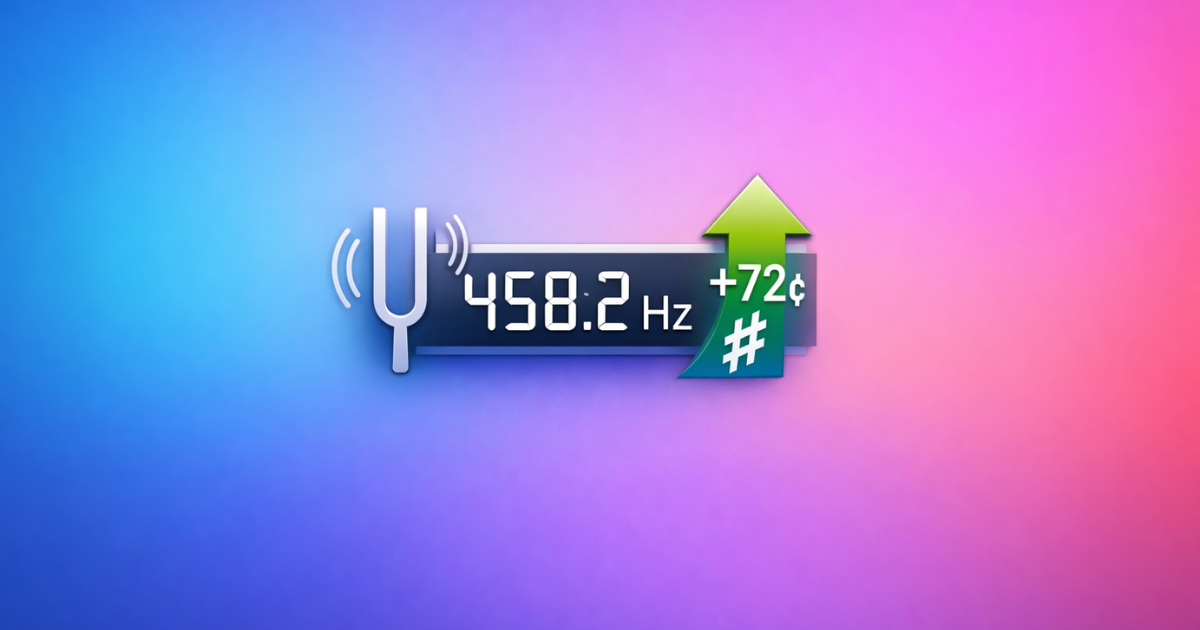
Have you ever come across the phrase 458.2 hz phase alternating line increased pitch audio cents and wondered what it actually means? At first glance, it sounds technical and confusing. But in reality, it simply describes a noticeable pitch increase in audio caused by a frequency shift and phase behavior. If you’ve ever played a sound file and felt like it sounded slightly sharper than normal, this concept might be the reason.
That subtle shift often comes down to something measured in cents, not dollars — but tiny pitch units in sound.
Today, we’re diving deep into a topic that sounds technical at first:
458.2 hz phase alternating line increased pitch audio cents
Don’t worry. I’ll break it down in plain English. By the end of this guide, you’ll understand what it means, why it happens, and how it affects your audio.
Let’s get into it.
What Is 458.2 Hz in Simple Terms?
First, let’s talk about Hz (Hertz).
Hertz measures frequency — or how many times a sound wave vibrates per second.
For example:
- 440 Hz is the standard tuning pitch for musical note A4.
- If you go higher than 440 Hz, the pitch goes up.
- If you go lower, the pitch drops.
Now here’s the interesting part.
458.2 Hz is higher than 440 Hz.
That means the pitch is sharper.
But how much sharper?
That’s where audio cents come in.
What Are Audio Cents?
Think of cents like small steps between musical notes.
- One semitone (like from C to C#) = 100 cents
- One octave = 1200 cents
Cents allow us to measure tiny pitch differences.
Imagine tuning a guitar.
If you tighten the string just slightly, the pitch increases — but not enough to jump to the next note. That small change is measured in cents.
So when we talk about:
458.2 hz phase alternating line increased pitch audio cents
We’re talking about a frequency shift that causes an increase in pitch measured in cents.
How Much Higher Is 458.2 Hz Compared to 440 Hz?
Let’s break it down simply.
440 Hz → standard pitch (A4)
458.2 Hz → noticeably sharper
The difference between 440 Hz and 458.2 Hz equals roughly 71–72 cents higher.
That’s almost three-quarters of a semitone.
And here’s why that matters:
- Musicians can clearly hear a 10-cent difference.
- 70+ cents is very noticeable.
- It will sound sharp and out of tune compared to standard tuning.
So yes — this is not a tiny change.
What Does “Phase Alternating Line” Mean?
Now let’s tackle the trickier part.
A phase alternating line refers to how audio signals flip or shift phase during transmission.
Let me simplify it.
Imagine two people pushing a swing:
- If both push in the same direction → the swing goes higher.
- If they push opposite each other → the swing slows down.
That “push timing” is similar to phase in audio.
When phase alternates:
- The waveform flips.
- It can affect how frequencies combine.
- It may create perceived pitch changes.
So when someone says:
458.2 hz phase alternating line increased pitch audio cents
They’re likely describing:
- A frequency shift
- Caused by signal processing
- Resulting in a measurable pitch increase in cents
Why Would Pitch Increase?
Great question.
Pitch can increase due to:
1. Playback Speed Changes
If audio plays slightly faster, pitch increases.
Like when you play a vinyl record at the wrong speed.
2. Digital Sample Rate Mismatch
If a file recorded at 44.1kHz is played at 48kHz without proper conversion, pitch shifts upward.
This is extremely common.
3. Phase Processing Effects
Certain audio tools manipulate phase to widen stereo sound.
In rare cases, this can slightly affect perceived pitch.
4. Intentional Retuning
Some producers intentionally tune audio to non-standard frequencies like 458.2 Hz.
Why?
To experiment.
To create a specific tonal feel.
Or simply for creative reasons.
Is 458.2 Hz “Special”?
You may have heard online claims that certain frequencies have special powers.
Let’s keep this grounded.
Standard music tuning is:
- A4 = 440 Hz
Some alternative tunings:
- 432 Hz (popular in meditation circles)
- 444 Hz (slightly brighter)
- 448 Hz (even sharper)
458.2 Hz is simply a higher tuning reference.
There’s no scientific evidence that it has mystical effects.
But musically?
It will sound sharper and brighter.
How to Calculate Pitch Difference in Cents
Here’s a simplified formula:
Cents = 1200 × log₂ (f2 / f1)
Where:
- f1 = original frequency (440 Hz)
- f2 = new frequency (458.2 Hz)
The result is about 71–72 cents.
You don’t need to memorize the math.
Just remember:
458.2 Hz phase alternating line increased pitch audio cents = a noticeable upward pitch shift.
How Does This Affect Music?
Let’s say a band records at standard tuning (440 Hz).
Then someone accidentally plays it back referencing 458.2 Hz.
What happens?
- Vocals sound sharper
- Instruments feel tighter
- The track may feel slightly “off”
It’s like drinking coffee that’s just a little too strong.
Not terrible.
But definitely noticeable.
Real-World Example
I once worked on an audio project where something sounded wrong.
Everything felt tense.
The instruments clashed slightly.
After checking the file, we realized the sample rate was mismatched.
The playback pitch had increased by about 60 cents.
Once corrected, everything sounded natural again.
That’s how powerful small pitch shifts can be.
And that’s exactly what happens in cases involving:
458.2 hz phase alternating line increased pitch audio cents
Can You Hear a 70-Cent Difference?
Yes.
Even non-musicians can hear:
- 20 cents = subtle but noticeable
- 50 cents = clearly sharp or flat
- 70+ cents = very obvious difference
Musicians will immediately recognize it as out of tune.
How to Fix Increased Pitch Issues
If you suspect pitch has shifted:
✔ Check Sample Rate
Make sure recording and playback rates match.
✔ Use Pitch Correction Tools
Most DAWs allow cent-level adjustment.
✔ Re-export Properly
Ensure correct file format and settings.
✔ Avoid Unintended Phase Processing
Be cautious with stereo widening plugins.
When Is Increased Pitch Useful?
Interestingly, raising pitch slightly can:
- Add energy
- Make vocals cut through
- Increase perceived brightness
- Create tension in cinematic music
Producers sometimes raise pitch by 10–20 cents intentionally.
But 70 cents?
That’s usually too much unless stylistically desired.
Is Phase Alternation Always Bad?
Not at all.
Phase techniques are used for:
- Stereo widening
- Creative sound design
- Noise cancellation
- Signal balancing
The key is control.
When uncontrolled, it may contribute to frequency misalignment or perceived pitch issues.
Why This Topic Confuses People
Let’s be honest.
The phrase:
458.2 hz phase alternating line increased pitch audio cents
Sounds intimidating.
But it really describes three things:
- A higher frequency (458.2 Hz)
- A signal or phase behavior
- A measurable pitch increase in cents
Once broken down, it’s not so scary.
Quick Summary
Here’s what you need to remember:
- 458.2 Hz is sharper than 440 Hz.
- The difference equals about 71–72 cents.
- That shift is clearly audible.
- Phase alternating line refers to waveform behavior.
- Sample rate mismatches often cause this issue.
- It can be fixed with proper tuning adjustments.
Final Thoughts
Audio is like cooking.
A tiny extra pinch of salt changes everything.
In the same way, a 70-cent pitch increase dramatically affects how music feels.
So next time you encounter something labeled:
458.2 hz phase alternating line increased pitch audio cents
You’ll know exactly what’s happening.
It’s simply a higher tuning reference causing a measurable pitch increase.
No mystery.
Just math, physics, and sound.
And honestly?
Once you understand it, audio becomes even more fascinating.
You May Also Like
-

 Gaming3 weeks ago
Cyberpunk 2077 Update 2.4 Speculation: What’s Coming Next?
-

 Blogs3 weeks ago
Graduations Pouch Pizza Purchase Game Zippergitsfh
-

 Blogs3 weeks ago
Christina Kebbit Monkfish: A Fresh Seafood Favorite
-

 Entertainment3 weeks ago
The Flying Elephant Memoirs of an Olympic Champion
-
 Business3 weeks ago
Brand Name Normalization Rules: A Comprehensive Guide
-
 Blogs2 weeks ago
Sovereign Foods Quality Control job Matric Pass Fail Requirements
-
 Business3 weeks ago
Deborah Charlesworth and Associates Port Colborne
-

 Blogs2 weeks ago
Kelley South Russell: A Closer Look at Her Life, and Story